- Aug 19, 2025
Drumline Rudiments
- Freestyle Rudiments
- Drumline History, Rudiments, Marching Percussion
- 0 comments
Before drumlines packed stadiums or led parades, drummers were battlefield communicators. Many of the patterns we still practice were shaped in Europe’s military traditions and later codified in manuals. Here are five foundational rudiments with the best-documented origins—and why they still matter.
1) Single-Stroke Roll
What we know: Swiss fife-and-drum traditions are among the earliest documented sources for rudimental playing (Swiss use in battle is cited as early as the 1300s). Early written descriptions/notated examples of rolls appear in Thoinot Arbeau’s Orchésographie (1588) and Marin Mersenne’s Harmonie Universelle (1636).
Single strokes are the baseline for speed, evenness, and endurance everything grows from here.
2) Double-Stroke (Open) Roll
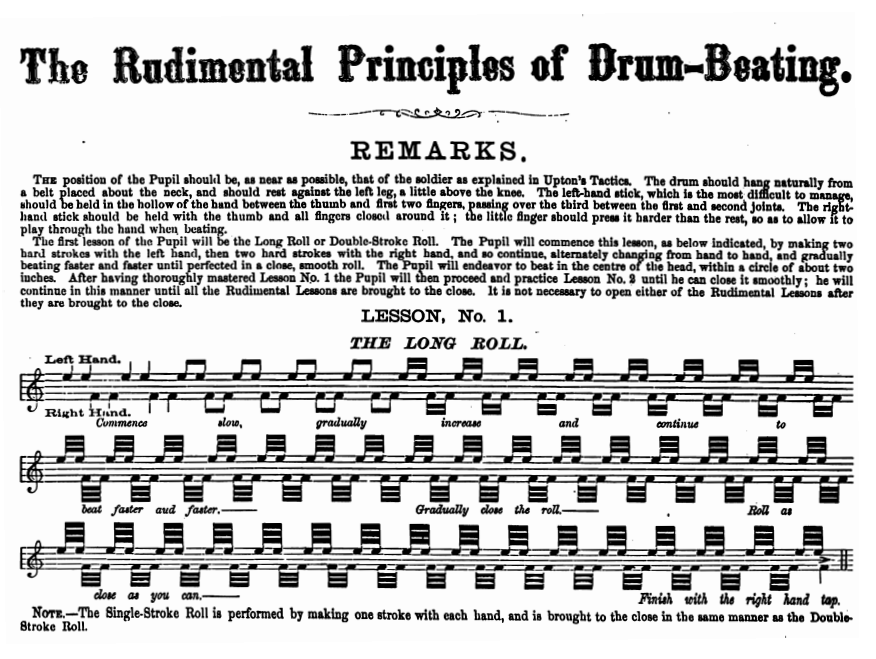
What we know: The “long roll” (built from repeating doubles) is explicitly listed in 19th-century manuals (e.g., Strube, 1870). Earlier theoretical descriptions of rolls show up in 17th-century French sources (Mersenne). In practice, doubles underpin the classic open roll heard in later British, American, and Swiss traditions.
Without clean doubles, you don’t have open rolls or modern corps clarity.
3) The Flam
What we know: Flam-type figures are documented in early French sources and analyses of 17th-century technique; the coup de charge (“charge stroke”) is traced to French rudimental vocabulary and later appears in Basel practice as systems cross-pollinated.
Why it matters: Flams add weight, width, and articulation a core skill for any drumline member.
4) The Ruff / Drag
What we know: “Ruff” (two soft preparatory strokes before a principal note) appears in English-language sources by the 18th century; by the American Civil War era, “drag” increasingly replaces “ruff” in U.S. manuals (Bruce & Emmett, 1862; Keach/Burditt/Cassidy, 1861). Both terms describe closely related ornaments.
Why it matters: Drags/ruffs are the gateway to a huge family of traditional rudiments (drag taps, ratamacues) and prominent in pipe band a military style drumming.
5) The Paradiddle
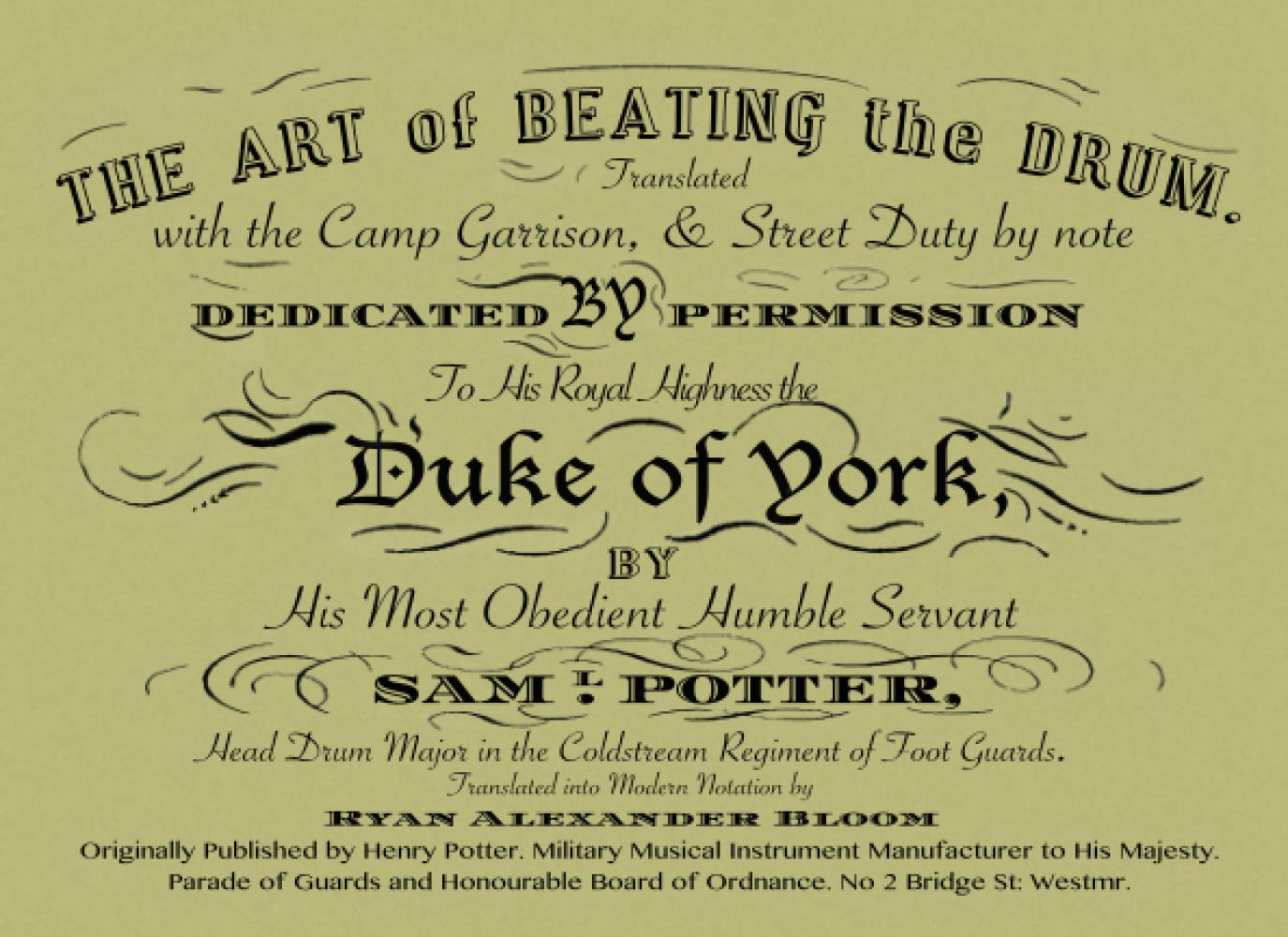
What we know: Paradiddles are widely considered a British/English contribution; early printed appearances are found in Samuel Potter’s The Art of Beating the Drum (1817). Later manuals spread variants (double/triple/flam/drag paradiddles).
Why it matters: Paradiddles develop lead-hand control and sticking flow vital for groove vocabulary and modern hybrid writing.
- $10
Freestyle Rudiments: A system for rudimental mastery
- Download
- 1 file
Ready to Go Beyond the 20 Essentials?
The free PDF gives you 20 must-know rudiments. Freestyle Rudiments: A System for Rudimental Mastery shows you how to create, understand and practise more than 500 modern rudimental variations.
50+ page PDF • Instant download • $10